
Cooling solutions
Liquid-Cooled Miner Hosting
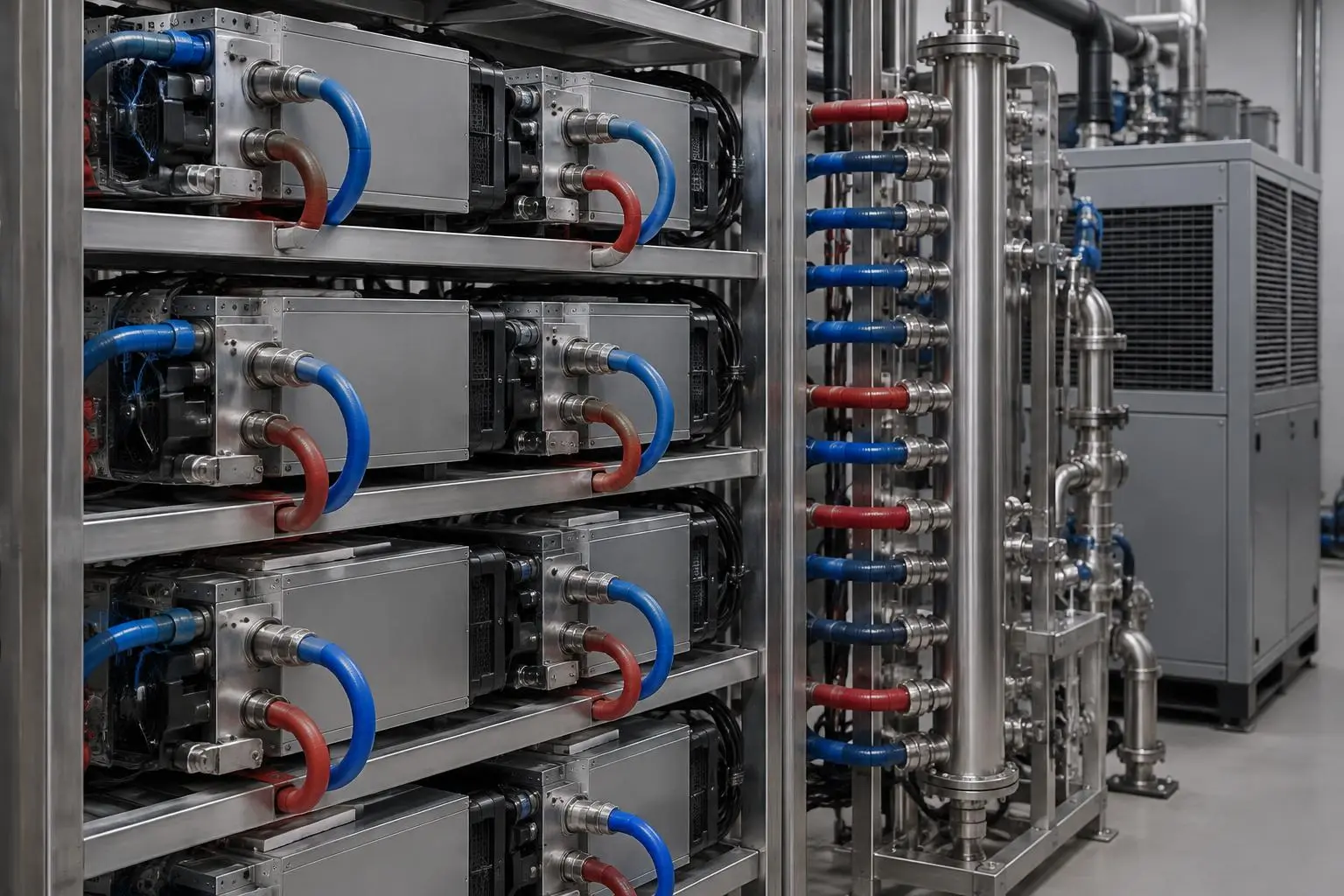
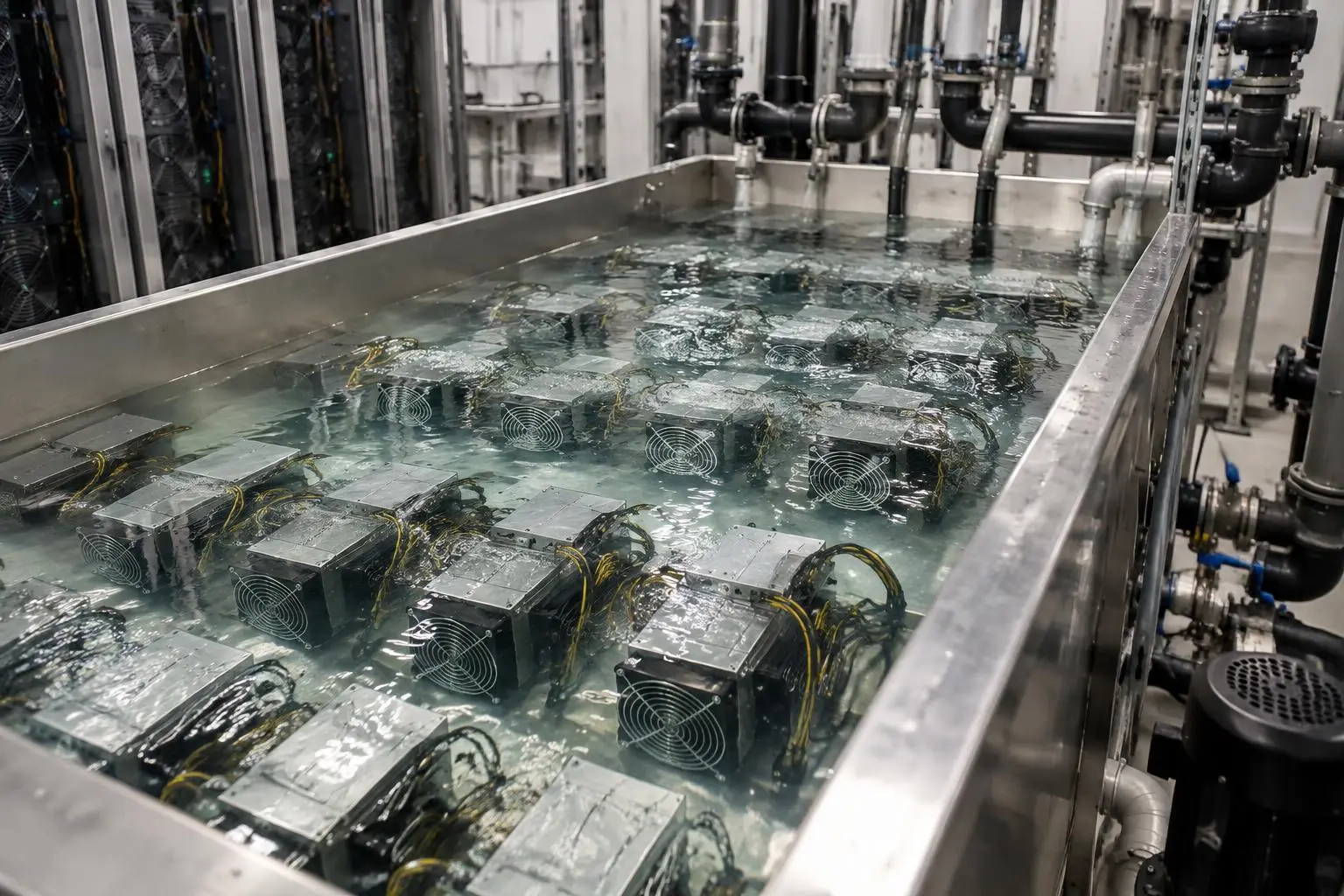
Liquid cooling covers any system that uses fluid instead of air to remove heat — including hydro cold-plate miners and immersion tanks.
Overview
Hydro vs immersion: two liquid approaches
Hydro (direct liquid cooling) uses cold plates and hoses connected to each miner. Immersion cooling submerges the whole miner in a non-conductive dielectric fluid.
Both move heat far more efficiently than air. The right choice depends on your miner model, density goals and budget.
- Hydro: for factory hydro-series miners
- Immersion: for compatible air-cooled miners adapted for fluid
- Both: quieter, cleaner and more temperature-stable than air
Liquid cooling is a category, not a single hosting format
Liquid-cooled miner hosting covers two distinct approaches: hydro cooling and immersion cooling. Hydro systems move coolant through dedicated cooling passages or cold plates in compatible mining hardware. Immersion systems place suitable equipment in a dielectric fluid that transfers heat away from components. Both use liquid to carry heat, but their equipment requirements, service procedures, and infrastructure differ. Start with the miner you own or plan to buy rather than treating either cooling method as a universal upgrade.
This comparison focuses on choosing a hosting format, not designing its cooling system. Use the hydro-cooled miner hosting guide for hydro-specific requirements and the immersion cooling hosting guide for immersion-specific considerations. If your equipment uses conventional fans and heatsinks, compare air-cooled miner hosting before considering a conversion. A useful comparison holds the miner model, intended operating mode, and contract scope constant; otherwise, differences in hardware can be mistaken for benefits of cooling.
Liquid-cooled vs. air-cooled miner hosting
Compare the complete installation rather than assuming that liquid cooling automatically delivers better mining economics.
| Comparison point | Air-cooled hosting | Liquid-cooled hosting |
|---|---|---|
| Hardware fit | Generally suits factory air-cooled ASICs operating with their intended fans and heatsinks. | Requires purpose-built hydro hardware or equipment assessed for immersion compatibility. |
| Heat removal | Airflow carries heat away from heatsinks; ventilation and air conditions matter. | Liquid transports heat to a separate rejection system; its capacity still limits operation. |
| Space and density | Layout must accommodate airflow paths, exhaust separation, and maintenance access. | May concentrate more miner power in a smaller equipment footprint, subject to infrastructure limits. |
| Maintenance approach | Work commonly involves fans, dust management, airflow checks, and hardware troubleshooting. | Work depends on the format and can involve fluid circuits, connections, or equipment handling. |
| Noise considerations | High-speed miner fans are a major source of equipment noise. | Miner fan noise may be reduced or eliminated, but pumps and heat-rejection equipment still produce noise. |
| Economic comparison | Evaluate hardware cost, energy use, maintenance terms, and achievable operation. | Include cooling infrastructure, auxiliary energy, compatibility work, and any conversion-related costs. |
Hydro vs. immersion: which liquid format fits?
These formats solve a similar heat-transfer problem through different equipment interfaces; they are not interchangeable hosting options.
| Decision factor | Hydro cooling | Immersion cooling |
|---|---|---|
| Starting hardware | Usually begins with a miner designed for a specified liquid-cooling circuit. | Begins with a miner whose materials, electronics, and configuration are suitable for the selected dielectric fluid. |
| Cooling interface | Coolant travels through designated passages or cold plates rather than bathing the full assembly. | Dielectric fluid contacts immersed components and carries heat into the cooling system. |
| Compatibility review | Check the exact model's electrical and coolant-interface requirements. | Check fluid compatibility, required modifications, firmware behavior, and manufacturer guidance. |
| Service workflow | Access and removal can require isolating and disconnecting the cooling circuit. | Removal can require draining, handling residual fluid, and preparing equipment for service. |
| Future relocation | A destination needs compatible electrical supply and hydro infrastructure. | A destination needs compatible immersion infrastructure or a documented plan for restoring another configuration. |
| Next level of detail | Review hydro hosting requirements for the format-specific evaluation. | Review immersion hosting considerations before selecting equipment or planning conversion. |
Choose by exact miner model, not product family
A shared brand or product-family name does not establish cooling compatibility. Manufacturers can sell air-cooled and hydro variants with different power supplies, electrical connections, enclosures, and operating requirements. Identify the complete model designation and hardware revision, then collect its manufacturer documentation. The intended power mode also matters: a cooling arrangement suitable for standard operation may not support a higher-power profile. Do not make a purchase decision from nominal hashrate alone.
For equipment you already own, separate technical possibility from commercial practicality. A conversion may involve changes that affect warranty coverage, repair handling, or resale flexibility. For a new purchase, compare a complete hardware-and-hosting combination rather than comparing the hosting charge in isolation. Use the supported miners page as a starting point for model research, but obtain explicit confirmation of the exact configuration before committing hardware to a particular cooling format.
- Factory hydro model: evaluate hydro first; verify its specified electrical supply, coolant interface, and permitted operating conditions.
- Factory air-cooled model: use air hosting as the baseline; assess immersion only after reviewing conversion requirements and warranty implications.
- Equipment already configured for immersion: document the fluid used, modifications made, and service history before considering another installation.
- Mixed fleet: evaluate each model separately. One cooling format may not be the best technical or economic fit for every unit.
- Uncertain model or revision: pause the selection until nameplate details and manufacturer specifications are available.
Compare total cost and usable density
Hosting prices are quote-only. When comparing proposals, request a clear breakdown of energy billing, cooling-related charges, installation, maintenance, and equipment removal. Establish whether auxiliary cooling energy is included, allocated separately, or captured by the billing meter. Miner energy consumption can be estimated as average input power in kilowatts multiplied by operating hours, but that calculation alone does not establish the full hosting bill. The hosting pricing page and hosting cost calculator provide places to organize the commercial comparison without assuming a universal rate.
Higher density means more electrical load and heat concentrated within a given footprint; it does not mean less energy consumed per hash. A compact equipment layout still needs adequate electrical distribution, heat rejection, fluid circulation where applicable, and safe maintenance access. Compare efficiency at the intended operating point, including auxiliary loads where measurable. Model standard operation before considering higher-power settings, which can increase hashrate without improving efficiency. Mining revenue is not guaranteed, and a cooling choice cannot remove exposure to network difficulty, coin price, downtime, or hardware failure.
Build a like-for-like hosting comparison
Use the same assumptions across air, hydro, and immersion proposals so that differences remain visible.
- 01
Fix the equipment baseline
Record exact models, quantities, expected input power, and intended operating profiles. Identify any conversion or additional hardware separately.
- 02
Align the billing boundary
Check what the meter measures and which supporting loads are included. Distinguish recurring charges from installation, repairs, and removal costs.
- 03
Compare service and exit terms
Review maintenance authorization, replacement-part responsibility, equipment access procedures, and preparation for return shipment. Cooling format can change the work involved.
- 04
Test less favorable scenarios
Recalculate economics with lower mining revenue, interrupted operation, and repair expenses. Prefer a decision that remains understandable without assuming ideal conditions.
FAQ
Common questions
Can any miner be liquid-cooled?
Hydro requires hydro-series models. Many air-cooled miners can be adapted for immersion. We confirm compatibility during assessment.
Do you guarantee mining revenue?
No. We provide hosting infrastructure and services. Mining revenue depends on network difficulty, coin prices and hardware efficiency, which are outside our control.
Can an air-cooled ASIC connect directly to a hydro cooling loop?
Generally, no. A conventional air-cooled ASIC does not have the dedicated coolant passages or cold plates needed to connect directly to a hydro loop. Retrofitting would require a specifically engineered solution, not simply removing fans or adding hoses. Compare factory hydro hardware separately from an immersion conversion, and check manufacturer guidance before modifying equipment.
Does a miner's published efficiency include cooling-system electricity?
Do not assume it does. Published efficiency typically describes the miner under stated test conditions, while external pumps, fans, or other heat-rejection equipment may sit outside that measurement boundary. Check the manufacturer's specification and the hosting proposal's metering definition. For a meaningful comparison, distinguish miner-only efficiency from total installation energy use.
Should a mixed fleet use the same cooling method?
Not necessarily. Different models may have different cooling interfaces, electrical requirements, conversion costs, and remaining useful lives. Keeping some units air-cooled while selecting hydro or immersion for others can be technically reasonable. Compare each model's complete cost and service requirements before deciding whether operational simplicity justifies standardizing the fleet.
What should I check about returning an immersion miner for repair?
Confirm the repair provider's acceptance rules before immersion deployment. Ask whether it accepts equipment exposed to the selected fluid, what draining or cleaning is required, and whether modifications affect warranty eligibility. Document the fluid and configuration used. Do not assume a standard repair or shipping process remains suitable after immersion.
Is liquid cooling worthwhile if I will not overclock?
It can be, but overclocking is not the only reason to evaluate it. Hardware compatibility, equipment layout, noise constraints, and maintenance requirements may also influence the choice. Compare the intended standard operating profile against an air-cooled alternative using total cost and energy consumption. Liquid cooling alone does not guarantee better efficiency or higher profit.
Ready to Host Your ASIC Miners?
Share your equipment details and our team will prepare a customised hosting quotation.