
Cooling solutions
Air-Cooled Miner Hosting
Engineered airflow for standard air-cooled ASICs — the most widely used and cost-effective way to host mining hardware.
How it works
Controlled hot and cold airflow
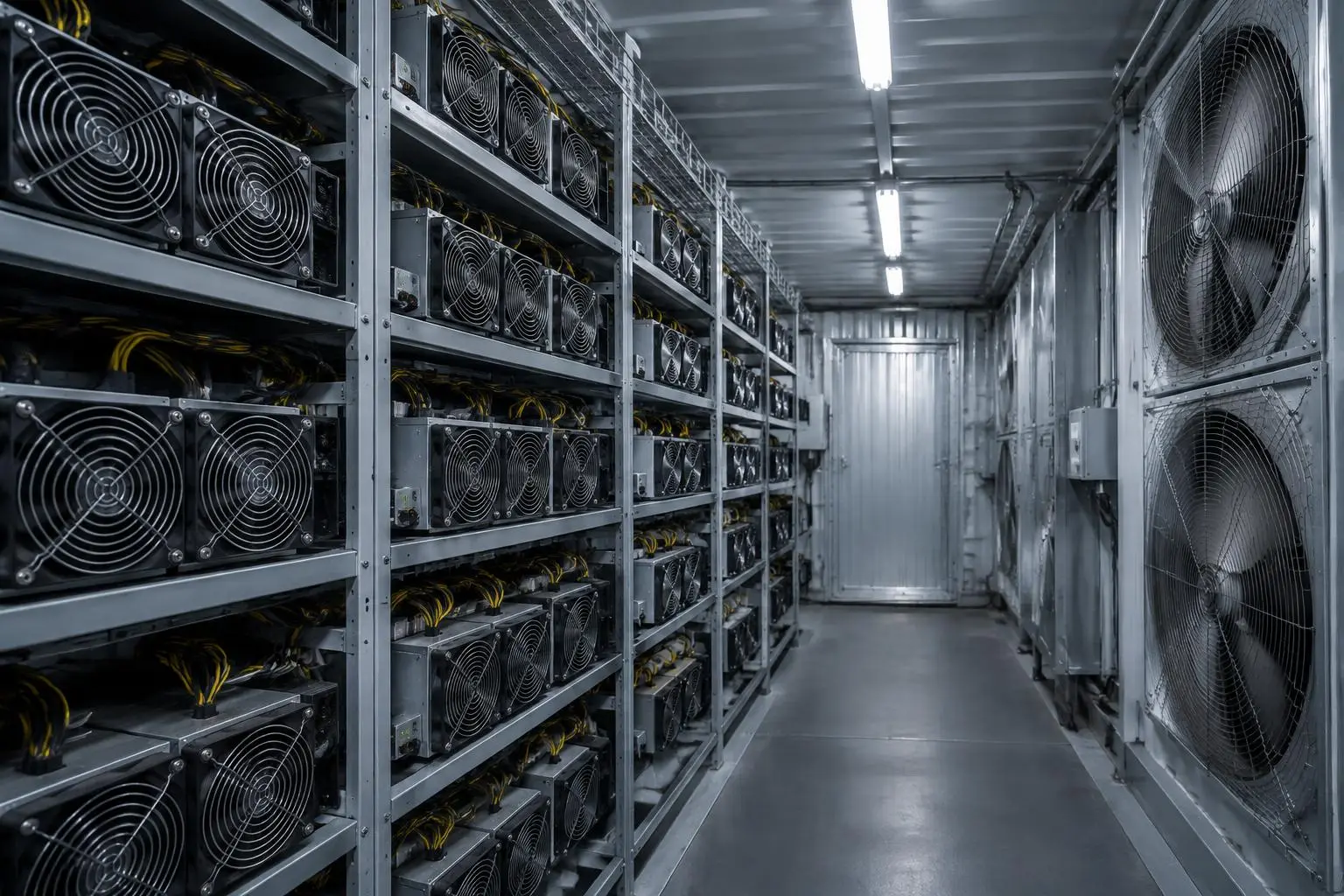
Air-cooled hosting draws filtered outside air across the front of each miner and exhausts hot air through industrial fans. Separating intake and exhaust prevents hot air recirculation and keeps chip temperatures within manufacturer specifications.
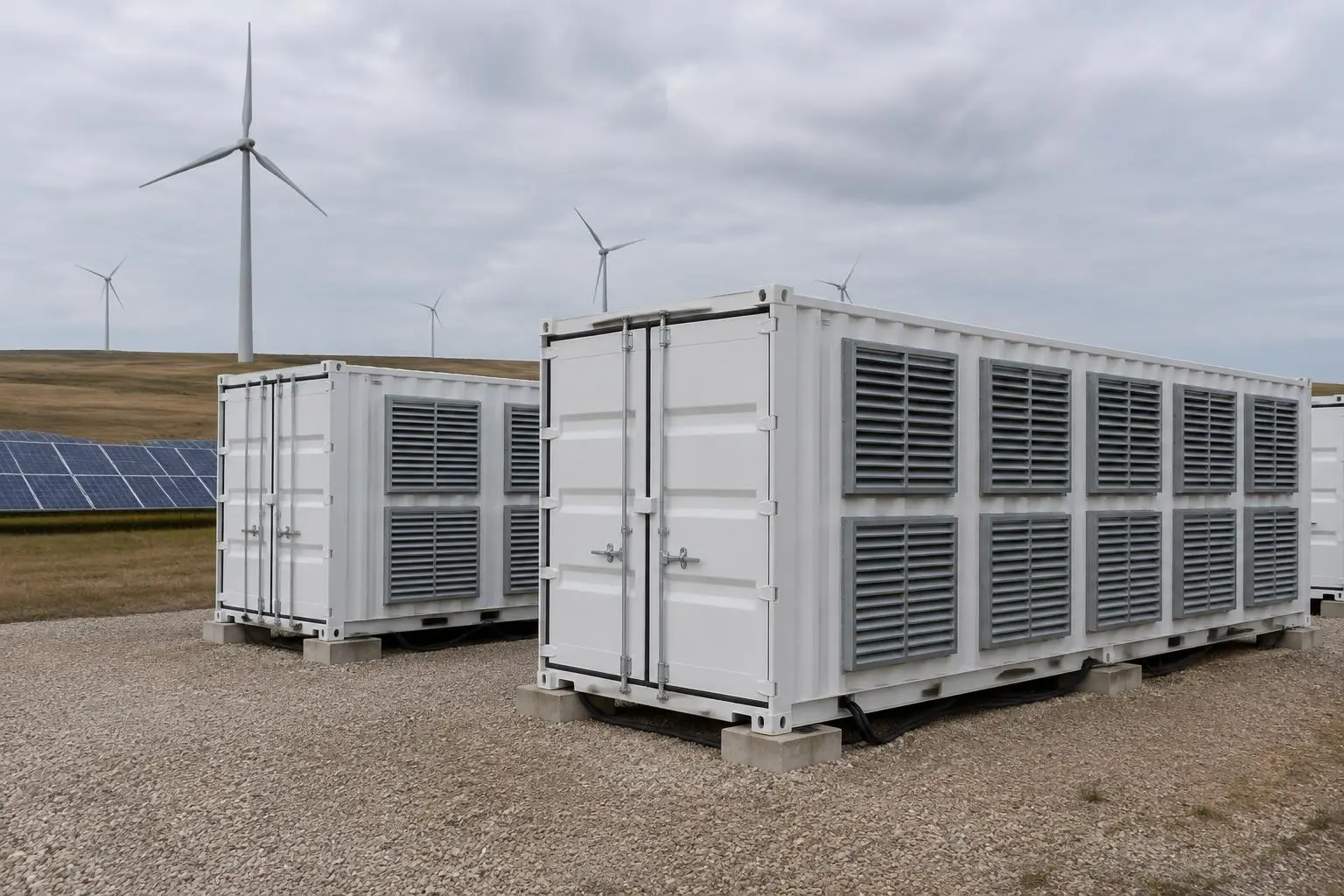
North Dakota's cool climate is well-suited to air cooling for much of the year.
- Hot aisle / cold aisle separation
- Industrial intake filtration
- High-volume exhaust fans
- Temperature and humidity monitoring
Best for
Standard air-cooled ASIC miners
Air cooling suits the majority of ASIC models sold today, including Bitmain Antminer S-series, MicroBT Whatsminer M-series and Canaan Avalon units. It is typically the most affordable hosting option.
Advantages of air-cooled hosting
Lower entry cost
Usually the most economical hosting option.
Broad compatibility
Works with most standard ASIC models.
Simple maintenance
Easy access for cleaning and fan replacement.
How air cooling removes heat from an ASIC miner
Air cooling transfers heat from the miner’s chips into a moving air stream. Effective cooling depends on the entire path, not just the fans attached to the machine.
- 01
Bring cooler air to the intake
An intake admits supply air into the cooling system. Its temperature establishes the starting point for heat removal: airflow alone cannot make a miner colder than the incoming air without another cooling process.
- 02
Filter the incoming air
Filters capture airborne particles before they reach miner components. Filter selection balances particle capture against airflow resistance. A filter that is too restrictive, clogged, or poorly fitted can undermine cooling even when the fans are running.
- 03
Distribute air through the cold aisle
The cold aisle feeds the miners’ intake sides. Clearances, rack layout, and separation from exhaust air help distribute that supply. Uneven distribution can leave individual machines short of cooling air despite adequate overall ventilation.
- 04
Move air across the heat sinks
Miner fans pull or push air through the chassis and across heat sinks connected to the chips. Heat moves into the air, which becomes warmer as it travels through the machine.
- 05
Collect and discharge the heated air
The hot aisle receives miner exhaust and directs it toward the exhaust system. Keeping that stream away from the intake limits recirculation. Temperature readings, fan behavior, and operating stability help identify whether the path is working effectively.
Reading the airflow diagram
Read a basic airflow diagram in this order: intake → filtration → cold aisle → miner fans and heat sinks → hot aisle → exhaust. The arrows represent the intended movement of air, not a promise that every machine receives an equal share. The cold aisle is the supply side; the hot aisle is the collection side. They describe relative temperatures rather than fixed temperature targets. An effective layout separates these streams so heated exhaust does not take a shortcut back into a miner’s intake.
The diagram also helps explain restrictions. Filters, louvers, duct bends, and narrow passages all add resistance that fans must overcome. Open gaps around equipment can create bypass paths, allowing air to move without passing through a miner. Cooling therefore requires both sufficient airflow and correct routing. As a general engineering relationship, heat removal is approximately air mass flow multiplied by its specific heat and temperature rise. More electrical load requires more airflow, a larger air-temperature rise, or another heat-removal method; the allowable rise remains limited by equipment specifications.
Ambient temperature, dust, and humidity
Ambient temperature matters because it influences the air available at the intake. As inlet temperature rises, the margin between incoming air and component temperature limits becomes smaller. Depending on the model and firmware, a miner may increase fan speed, reduce its operating frequency, or shut down to protect itself. Evaluate cooling against the manufacturer’s permitted inlet conditions, not a single generic temperature threshold. Weather averages alone are insufficient: warmer periods and local exhaust recirculation can determine whether a particular operating profile remains practical.
Dust changes cooling performance over time. Deposits on heat sinks reduce heat transfer, while loaded filters increase resistance and can reduce airflow. Fine particles may require different filtration than coarse debris, so a visibly clean intake is not conclusive evidence of adequate protection. Useful checks include filter condition, pressure drop where measured, and temperature or fan-speed trends under comparable loads. Cleaning should follow equipment guidance; uncontrolled compressed air or unsuitable cleaning methods can damage components or push contamination deeper into the chassis.
Humidity deserves attention at both extremes. Excessively dry conditions increase electrostatic-discharge concerns during handling, while moisture and airborne contaminants can contribute to corrosion. Condensation is the immediate risk when equipment surfaces are colder than the surrounding air’s dew point, especially after storage or transport. Relative humidity alone does not tell the whole story because it changes with temperature. Before energizing equipment, follow the manufacturer’s environmental limits and allow any required acclimation so surfaces are dry and operating conditions are suitable.
Which ASIC model types fit an air-cooled setup?
The starting point is an ASIC designed by its manufacturer for air cooling, with its intended fans, heat sinks, and chassis airflow path intact. Air-cooled variants exist across several established miner families, but a family name alone does not establish compatibility. Similar model names can refer to different power requirements or cooling configurations. Check the exact model and variant against the supported miner information, rather than assuming that every unit from the same manufacturer has identical hosting requirements.
A compatibility review should cover input voltage, rated power, connector requirements, physical dimensions, airflow direction, and firmware behavior. Modified firmware or overclocking can increase heat output beyond the standard configuration, so disclose those changes before planning deployment. Hydro models require an appropriate liquid circuit and should not be treated as interchangeable with fan-cooled machines. Likewise, an immersion-converted unit may need manufacturer-approved restoration before returning to air cooling. For a mixed fleet, document specifications per model instead of relying on a fleet-wide average power figure.
Air cooling: practical advantages and tradeoffs
Compare cooling methods against the exact hardware and operating conditions; no single approach is best for every deployment.
| Factor | Potential advantage | Tradeoff to evaluate |
|---|---|---|
| Equipment configuration | Factory air-cooled miners can retain their intended cooling architecture. | Electrical requirements and airflow compatibility still need model-specific review. |
| System complexity | Air cooling avoids coolant connections to each miner and immersion tanks. | Intakes, filtration, ventilation, and airflow separation still require deliberate engineering. |
| Maintenance access | Individual machines can generally be removed without draining a liquid circuit. | Fans, filters, and heat sinks create recurring inspection and cleaning work. |
| Ambient sensitivity | Suitable supply-air conditions support direct heat rejection through ventilation. | Higher inlet temperatures reduce thermal headroom and may constrain operating settings. |
| Contamination | Filtration can intercept particles before they reach equipment. | Filters introduce resistance, and remaining contamination can accumulate inside machines. |
| Noise | Fans provide cooling within the standard miner chassis. | High-speed fans and ventilation equipment require acoustic consideration; air cooling is not quiet. |
| Operating economics | Standard air-cooled hardware may avoid the conversion work associated with immersion. | Compare total costs, not cooling labels. Hosting prices are quote-only, and mining revenue is not guaranteed. |
When hydro or immersion may be a better fit
Consider hydro-cooled miner hosting when the selected ASIC is designed for liquid cooling or when a compatible liquid circuit better matches the deployment’s heat-density requirements. Hydro systems transfer heat into circulating coolant, typically through cold plates, then reject it through additional equipment. That changes the infrastructure requirements rather than eliminating them: coolant quality, flow, pressure, connections, and heat rejection must match the miner’s specifications. Hydro is not simply an airflow upgrade for an air-cooled unit, and an improvised conversion can introduce reliability and warranty problems.
Consider immersion cooling hosting when reducing direct exposure to airborne contamination or eliminating miner-fan noise is a priority, provided the hardware and materials are compatible. Immersion transfers heat into dielectric fluid, but pumps and heat-rejection equipment still require maintenance and may produce noise. Conversion procedures, fluid compatibility, service handling, and warranty terms deserve review before committing equipment. For either alternative, compare the complete system: miner configuration, supporting equipment, maintenance obligations, and expected operating conditions. A more complex cooling method does not automatically produce better economics or justify more aggressive operating settings.
FAQ
Common questions
How do you manage dust?
Intake air is filtered and miners are cleaned as part of scheduled maintenance.
What about winter temperatures?
Airflow is managed to avoid over-cooling and condensation during cold periods.
Do you guarantee mining revenue?
No. We provide hosting infrastructure and services. Mining revenue depends on network difficulty, coin prices and hardware efficiency, which are outside our control.
Can a higher fan-speed reading confirm that cooling is adequate?
No. Fan speed shows how quickly a fan is rotating, not how much useful air reaches the heat sinks. A restriction, damaged fan blade, or recirculation path can compromise cooling despite a high reading. Interpret fan speed alongside inlet temperature, chip-temperature trends, operating load, and error logs. Comparisons are most useful when the miner’s settings and surrounding conditions are similar.
Does removing a miner’s cover improve airflow?
Not necessarily. The chassis helps direct air through the intended cooling path. Removing panels can let air bypass heat sinks or disrupt the pressure conditions the fans were designed to handle. It can also expose components to damage. Keep the manufacturer’s specified configuration unless an approved procedure explicitly requires a change, and do not treat an open chassis as a substitute for correcting airflow restrictions.
Why might two identical miners report different temperatures?
Identical models can experience different inlet temperatures, airflow restrictions, dust accumulation, or fan condition. Firmware settings, power draw, and sensor behavior can also differ. Start by comparing operating profiles and the air entering each machine, rather than assuming the warmer unit has defective chips. A persistent difference under comparable conditions warrants inspection of its airflow path, fans, and heat-sink condition.
Should replacement fans match the original fan specifications?
Use manufacturer-approved replacements or verify all required specifications before substitution. Physical size and connector fit are not enough: voltage, current, speed feedback, control signals, airflow direction, and pressure capability can affect operation. An unsuitable fan may trigger faults or provide inadequate cooling while appearing to run normally. Follow safe shutdown procedures and the equipment’s service instructions when replacing components.
Ready to Host Your ASIC Miners?
Share your equipment details and our team will prepare a customised hosting quotation.